Outdoor lawn weddings look beautiful when they work. When they do not, the problems are obvious. Décor feels scattered. Guests seem unsure where to sit or stand. The space looks either overdone or strangely empty.
That usually happens because decoration is treated as a checklist instead of a response to the space.
An outdoor lawn is not a blank canvas. It already has colour, scale, light, and movement. Good wedding decoration ideas begin by noticing those things, not covering them up.
Start by Understanding the Space, Not the Trend
Before choosing flowers or fabrics, spend time on the lawn. Stand where the ceremony will happen. Notice the direction of sunlight. Watch how people naturally move through the space.
Some lawns feel wide and open. Others feel enclosed even without walls. Decoration works best when it follows this natural character.
Many outdoor weddings fail because the décor was designed elsewhere and dropped into the space. When decoration grows out of the lawn itself, it looks effortless, even when simple.
Mandap Design That Feels Right Outdoors
Outdoor mandaps do not need to be heavy or dramatic. Large structures often feel out of place against open skies.
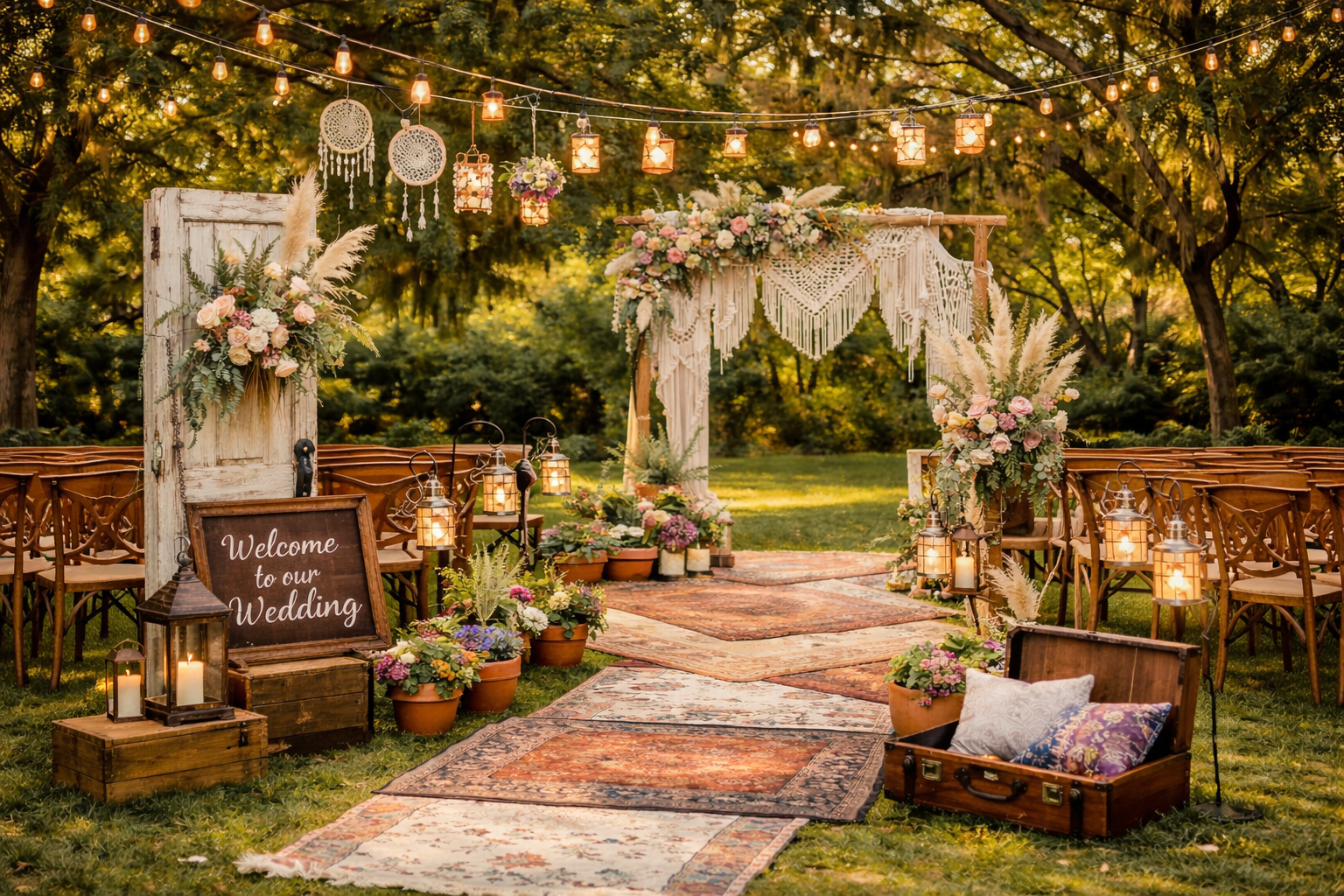
Lighter designs tend to work better. Wooden frames, subtle draping, and floral accents that frame the couple without hiding the surroundings.
The most effective mandaps do not try to dominate the lawn. They give the ceremony a centre without pulling attention away from the people in it.
Seating Shapes the Mood More Than People Realise
Seating is rarely treated as décor, but it influences how connected a ceremony feels.
Straight rows create distance. Curved or angled seating brings people closer to the moment. Guests feel involved rather than like spectators.
Materials matter too. Simple wooden chairs or cushioned benches often feel warmer than overly decorated seating. Comfort always shows in photographs.
Be Selective With Height
Outdoor lawns already have natural height. Trees, sky, and lighting structures create a sense of openness.
Adding too many tall décor elements can make the space feel cluttered. Instead, choose one or two places where height adds meaning. Perhaps above the mandap or along the entrance path.
When height is used with intention, it guides attention rather than competing for it.
Let Light Change Naturally
Daylight is already doing half the work for you.
During daytime ceremonies, décor should reflect light rather than fight it. Soft fabrics, natural colours, and clean lines feel calm and balanced.
As evening approaches, lighting should slowly take over. Warm lights feel more welcoming than bright white ones. Avoid lighting everything at once. Let the mood shift gradually.
Aisle Decoration That Feels Calm
The aisle is an emotional path, not a display area.
Outdoor aisles work best when decorated low and simple. Lanterns, small floral clusters, or fabric runners define the space without blocking views.
Repeating the same element along the aisle creates rhythm. Too much variety creates distraction.
Colour Choices That Sit Well Outdoors
Outdoor settings intensify colour. What feels soft indoors can feel overwhelming outside.
Neutral tones, natural greens, and muted shades blend well with lawns. They age better in photographs and feel easier on the eye.
If strong colours are important, use them sparingly. Let them appear in accents rather than everywhere.
Create Smaller Moments Within the Lawn
Large lawns can feel empty if everything is spread evenly.
It helps to think in smaller sections. A clear ceremony area. A quiet corner for conversations. A simple photo spot. These moments give the space structure without overfilling it.
Guests feel more comfortable when they can naturally gravitate to different areas.
Knowing When Less Is Enough
One of the hardest decisions is knowing when to stop adding.
Some lawns are already beautiful. Over-decorating them takes away from what makes them special. We have seen ceremonies feel more honest with very little décor, because nothing competes with the moment itself.
Decoration should support the experience, not announce itself.
Practical Details That Matter on the Day
Outdoor weddings bring real-world challenges.
Fabrics move with the wind. The ground is not always level. Décor shifts when people walk past.
Test setups in real conditions. Secure everything properly. Keep walkways clear. Have a simple backup plan for the weather.
These details are rarely visible when things go right, but very noticeable when they go wrong.
Decoration Is Not the Memory
People remember how they felt during a wedding. Decoration only plays a supporting role.
The best wedding decoration ideas are the ones that quietly do their job. They make people feel comfortable, guide attention, and allow emotions to surface.
When décor feels natural, the ceremony feels natural. And that is what stays with people long after the day is over.